
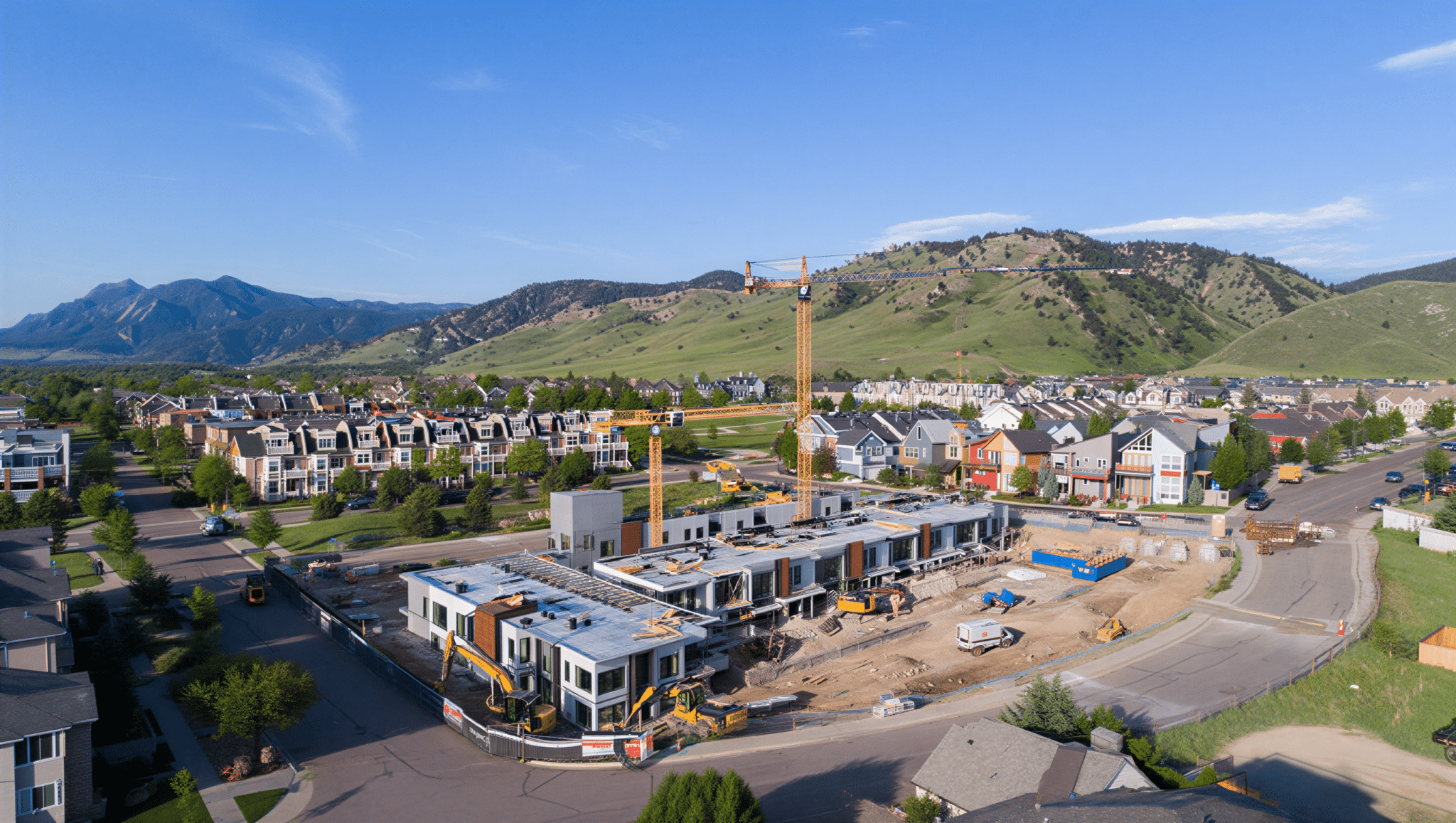
Over the past few years, I’ve watched East Boulder slowly shift from a more commercial, car-oriented area into something with much bigger potential. With the recent approval from the Boulder City Council for a 300-unit mixed-use project at 55th Street and Arapahoe Avenue, the East Boulder housing landscape is no longer changing gradually it’s officially underway.
From my perspective as someone working closely with buyers and sellers here, this isn’t just another development adding to the pool of East Boulder apartments. It’s part of a larger, city-backed vision to reshape how this area functions, and how people live in it. And for renters especially, it arrives at a moment when Boulder’s rental market is expensive, competitive, and short on good options in this part of the city.
How I See Urban Development Changing in East Boulder
What stands out to me about this project is not just the scale, but the direction. East Boulder has traditionally been built around convenience for cars — office parks, surface parking, and separated uses that made the area functional but not livable in any real sense.
What’s happening now is a shift toward something more integrated. The five-story building designed by Boulder-based Sopher Sparn Architects will replace surface parking lots with:
- 300 apartments, with more than half proposed as studios or one-bedrooms
- Nearly 3,000 sq ft of ground-floor retail for everyday walkable needs
- A transit hub connecting residents to Boulder’s broader bus network
- Light industrial workspace — maker spaces, artist studios, and production businesses
- All-electric construction, in line with Boulder’s sustainability standards
This is the first project approved under East Boulder’s new form-based development code — itself part of a broader city plan to bring up to 5,000 new housing units to the area over time. One building down. Many more to follow.
What It Means for Renters
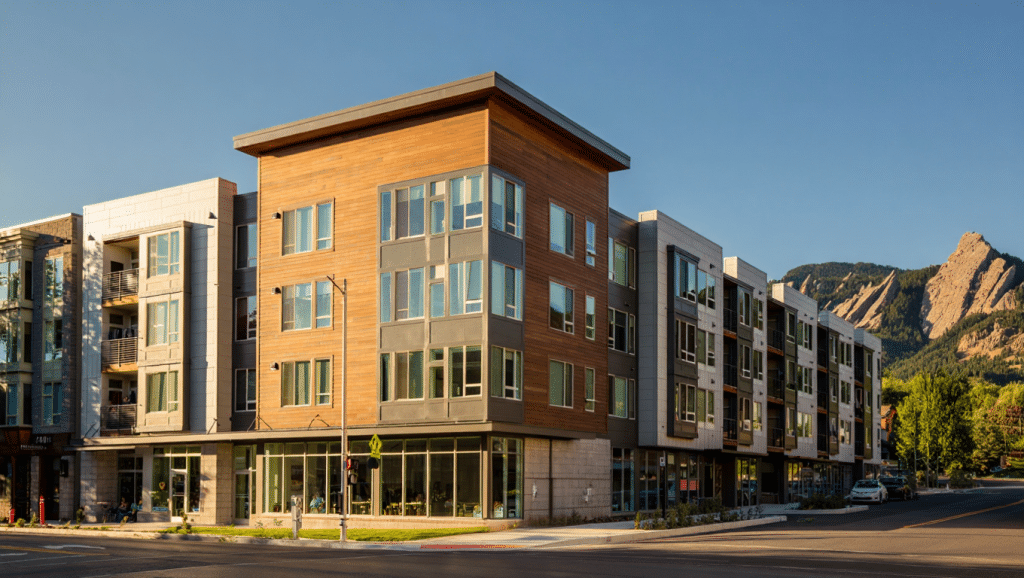
This is primarily a renter story, and it’s worth being specific about why. More than half of the 300 units are studios or one-bedrooms — the unit types most in demand from young professionals, graduate students, and anyone priced out of Boulder’s for-sale market.
Here’s how East Boulder stacks up against the broader city right now:
| Unit Type | Boulder City Average (2026) | East Boulder Average |
|---|---|---|
| Studio | $2,045/month | $1,800–$2,100/month |
| 1-Bedroom | $2,380/month | $2,164/month |
| 2-Bedroom | $4,091/month | Above city avg. |
Sources: Rent.com, Rentometer, Zumper — 2026 data
📍 Note: Boulder’s median rent across all property types including houses and larger units — sits at approximately $2,595/month per Zumper, which is 37% above the national average. The table above reflects apartment-specific figures only.
East Boulder currently sits slightly below the city-wide average for one-bedrooms, making it one of the more accessible parts of Boulder for renters. But accessible is relative — Boulder is still one of the most expensive rental markets in Colorado, and more supply is exactly what this neighborhood has needed.
What this development does is give renters more choice. And in a market this tight, choice is leverage.
A More Connected, Walkable Lifestyle — What That Actually Looks Like
Mixed-use development sounds good on paper. But what does it actually mean for someone renting in East Boulder day to day?
The project is designed around transit access, reducing car dependency in an area where driving has historically been unavoidable. Ground-floor retail means essentials closer to home. The maker space and light industrial component brings a working creative community into the building itself, rather than isolating residents from the neighborhood’s economic life.
For renters comparing options across Boulder, this kind of built-in infrastructure, walkable, transit-connected, mixed-use, represents a genuine lifestyle upgrade, not just a new address.
The Controversy Worth Knowing About
This project didn’t sail through without pushback, and renters and buyers deserve to understand why.
The vote: The city’s Planning Board approved it 4-3 — a narrow margin that exposed real tensions about East Boulder’s direction.
The criticism: Several board members called the design a “big cube,” arguing it fails the form-based code’s requirement for human-scaled facades. Specific concerns included:
- Facade variation described as “negligible” or “imperceptible” by multiple members
- Height variation placed on the north side is not visible from Arapahoe Avenue
- Insufficient open space and resident amenities relative to community expectations
The bigger concern: Planning Board Vice Chair Laura Kaplan, who voted against, put it plainly this building sets the precedent for every project that follows in East Boulder. Planning Board Chair Mark McIntyre, who voted in favor, admitted he was “alarmed” that the code permits buildings bigger and boxier than what the community originally envisioned.
What happened next: The Planning Board formally wrote to City Council, calling the form-based code “inadequate” around rooflines, facade variation, and open space. City Council declined to pursue changes any revision could take two years, and councilmembers are only serving one-year terms this cycle due to Boulder’s transition to even-year elections.
So the code stands, the project moves forward, and East Boulder’s new chapter begins with a building that even some of its supporters view with ambivalence.
What It Means for Buyers and Investors
For buyers, this isn’t the headline, but it’s a meaningful signal worth paying attention to.
The opportunity:
- East Boulder is entering a transformation phase that historically creates early-mover advantage
- Properties near the new development corridor are positioned to benefit from rising foot traffic, improved transit, and growing retail
- Boulder’s median single-family home price sits at $1.05M–$1.15M city-wide, but East Boulder remains comparatively accessible within that range
The rental demand case: According to Redfin data, Boulder buyers need 72.5% more income than renters to afford a typical home, one of the highest income premiums in the country. That gap keeps a large, high-quality tenant pool in the rental market long-term, which is good news for investors in well-located East Boulder properties.
The honest caveat:
- This is a 7–10 year play, not a short-term flip
- Development unfolds gradually, and East Boulder’s transformation will take time
- Buyers going in expecting quick appreciation are likely to be disappointed
The Bigger Picture I'm Watching
To me, this project is less about one building and more about what it signals for East Boulder as a whole. The direction is clear; the question is how well it gets executed.
If the city refines the form-based code (as the Planning Board is pushing for), future projects may be better designed, more varied, and closer to the community’s original vision for the area.
If the code stays as-is, future buildings may repeat the same “big cube” concerns that divided the board this time, and East Boulder risks adding density without the design quality that makes density worth living in.
Either way, East Boulder is being redeveloped. That much is settled.
Final Thoughts
From where I stand, this approval marks a real turning point for East Boulder. For renters, it means more options in a neighborhood that has long been underserved by studios and one-bedrooms at a price point slightly below the Boulder average, in a location being redesigned around transit and walkability. For residents, it means a neighborhood actively changing more energy, more density, and a different character. For buyers and investors, it’s an early signal of where demand is heading over the next decade.
East Boulder is evolving into something meaningfully different than what it used to be. Whether that evolution suits your lifestyle, your budget, or your investment horizon is exactly the kind of conversation worth having, and if you’re weighing your options in East Boulder or anywhere across Boulder, the Phillips Team is here to help you think it through.
FAQs
When will the East Boulder apartments at 55th and Arapahoe be ready to rent?
No official timeline has been announced. Based on typical Boulder development cycles, a 2028 to 2029 move in window is a reasonable estimate.
How much will rent be at the new East Boulder development?
Pricing has not been released. Given current East Boulder averages and the building’s new all electric transit oriented design, expect rents at or above the neighborhood average of around $2,164 for a one bedroom.
Will this new development make Boulder rent go up or down?
One project will not shift the market dramatically. It adds meaningful supply and more choice for East Boulder renters specifically, with broader impact only if the city’s 5,000 unit goal moves forward.
Why did some Planning Board members vote against the East Boulder project?
Three members opposed it over design concerns, calling the facade variation “negligible” and the height changes invisible from Arapahoe Avenue. Their worry is that this building sets a weak design precedent for everything built in East Boulder next.
How will this impact East Boulder apartments and rental demand?
More units mean more choice in a neighborhood with historically limited rental inventory. As the area becomes more connected and desirable, demand is likely to grow, keeping moderate upward pressure on rents over time.
Is East Boulder worth investing in right now?
For investors with a 7 to 10 year horizon, the city backed development plan and strong rental demand make a reasonable case. It is not a short term play.

CONTACT THE PHILLIPS TEAM TO HELP YOU WITH YOUR NEXT BOULDER AREA HOME
Shad & Claudine Phillips – Certified Mountain Area Specialist 303-218-6926
Have Questions? – Text @ 214-682-2113 – No Really, I Don’t Mind!