
Renting vs Buying in Boulder is one of the most common questions I get, and honestly it is never a simple one to answer. That is because it is not just about finding a place you like. It is about understanding how that choice fits into your finances, your timeline, and your long-term plans.
Whether you are relocating here for the first time or have lived in Boulder for years and are finally ready to plant roots, this decision carries real financial weight. And in a place like Boulder’s housing market, where home prices, rental demand, and lifestyle expectations all intersect, getting it right matters more than most people realize.
I have spent years working in Boulder’s real estate sector and I have put this guide together to break things down in a way that helps you move forward with clarity and confidence.
What Does It Actually Cost to Rent in Boulder?
This is always the first question I get, so let me give you the clearest possible answer. Based on Apartments.com rent market data updated April 2026:
| Unit Type | Average Monthly Rent | Average Size |
|---|---|---|
| Studio | $1,643 | 502 sq ft |
| 1 Bedroom (Apartment) | $1,882 | 688 sq ft |
| 2 Bedroom (Apartment) | $2,352 | 946 sq ft |
| 3 Bedroom (Apartment) | $3,440 | 1,265 sq ft |
| 2 Bedroom (House) | $3,616 | 1,178 sq ft |
| 3 Bedroom (House) | $4,332 | 1,468 sq ft |
Where you rent within Boulder matters just as much as what you rent. If budget is the priority, these neighborhoods consistently come in below the city average:
- Aurora Terrace and Keewayden average $1,569 to $1,617 per month
- Martin Acres and Whittier Boulder sit around $1,729 to $1,738 per month
- Gunbarrel offers more space for around $1,783 per month
On the other end, Pearl Street and Downtown Boulder regularly exceed $3,100 per month. The encouraging news this year is that average rents have dropped 3.6% compared to 2024, which gives renters a little more negotiating room than they have had in recent years.
To afford a one-bedroom comfortably using the standard 30% income rule, you need to earn around $75,000 per year.
What Does Buying a Home in Boulder Look Like in 2026?
| Price Tier | Boulder | National Average |
|---|---|---|
| Starter (5% to 35%) | $487,560 | $260,000 |
| Mid (35% to 65%) | $734,267 | $375,000 |
| High (65% to 95%) | $1,156,393 | $581,000 |
| Median Household Income | $113,268 | $87,934 |
Even at the starter tier, Boulder homes cost nearly double the national equivalent.
- A mid-tier home at today’s mortgage rate of around 6.6% with 20% down puts your principal and interest payment at roughly $4,200 to $4,500 per month, and that is before property taxes, insurance, and maintenance enter the picture.
- Household incomes above $180,000 are typically needed to carry that without stretching yourself thin.
That said, the market has quietly shifted in buyers’ favor this year. Homes are selling fast at around 96% of asking price, but inventory has grown and there is genuine room to negotiate in a way that simply did not exist two years ago. For the right buyer, this is actually one of the better entry points we have seen in a while and timing that entry correctly can make a significant difference.
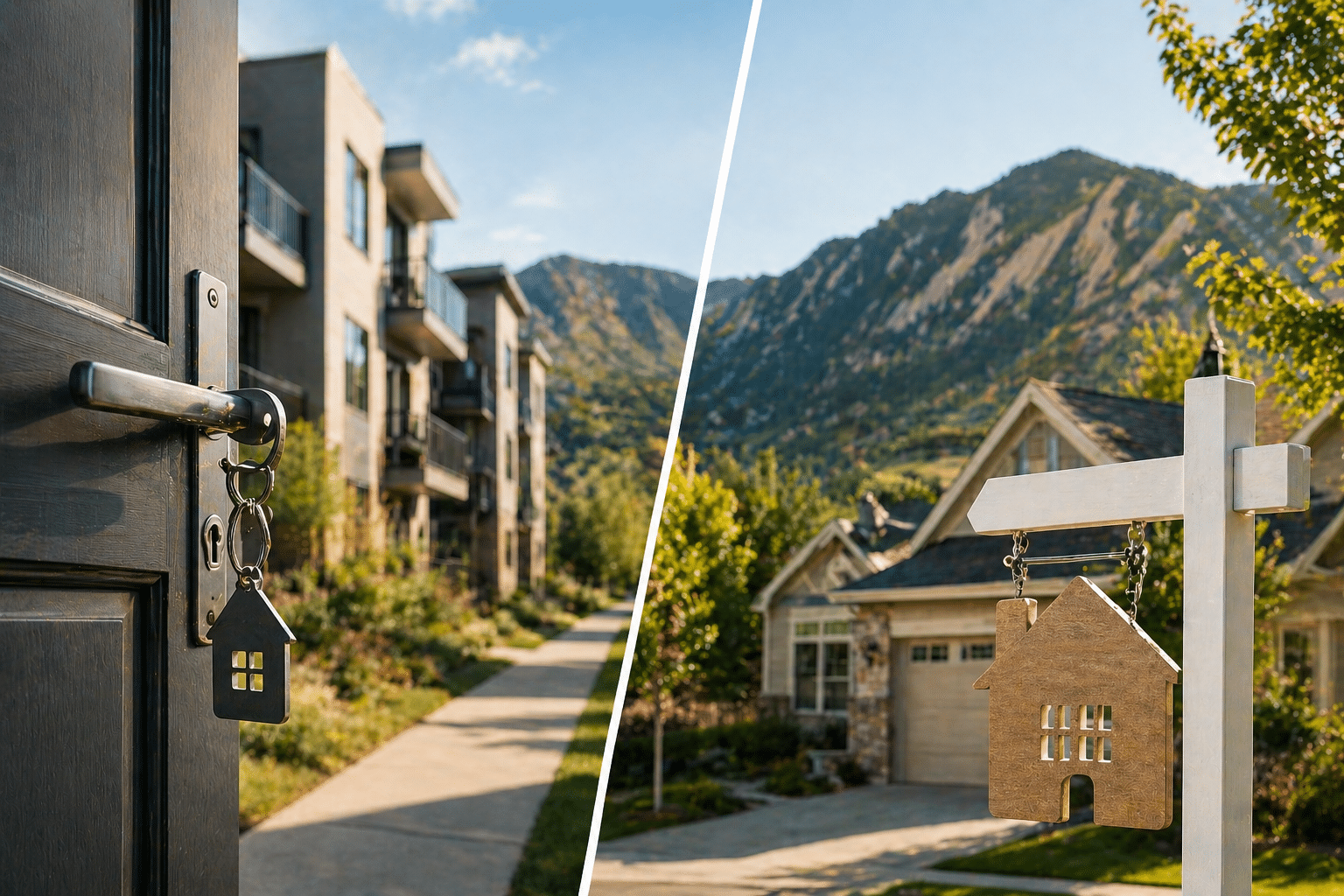
Renting vs Buying in Boulder: how to determine what you need?
Month to month, renting is cheaper and there is no debating that. But the real question is what each option is doing to your financial future over time. Here is how I frame it for people I work with:
Renting gives you:
- Lower monthly cost and minimal upfront commitment
- Flexibility to move without the cost and complexity of selling
- No exposure to maintenance costs or property tax increases
Buying gives you:
- A fixed payment that does not rise the way rents do
- Equity that builds with every single mortgage payment
- Long-term protection in a city where supply is structurally constrained
The break-even point in Boulder, where buying becomes financially superior to renting when you account for equity and appreciation, generally falls between five and eight years. Clear that window, and the math shifts strongly in a buyer’s favor.
So Should You Rent or Buy in Boulder?
The right answer depends on three things: your timeline, your finances, and what you want from life here.
- Your timeline tells you whether ownership has enough time to pay off financially.
- Your finances tell you what you can genuinely sustain month to month without stretching thin.
- Your life goals tell you whether stability or flexibility matters more right now.
Renting makes more sense if you are staying in Boulder for fewer than five years, still building your savings, carrying significant debt, or simply need the kind of flexibility that ownership cannot offer right now. There is absolutely no shame in that. Renting strategically while you build your financial foundation is one of the smartest moves you can make in a market like this.
Buying makes more sense if you are committing to Boulder for seven or more years, have a 20% down payment ready, and your income can comfortably support the full cost of ownership including taxes, insurance, and maintenance.
If those boxes are checked, waiting is likely costing you more than it is saving you.
My Honest Recommendation
If you are in Boulder for the long haul and your finances are in order, buying is almost always the right move. Not because renting is bad, but because every year you rent in a market like this is a year of equity building you cannot get back.
That said, buying before you are financially ready is far worse than renting a little longer.
Every situation is different though, and knowing which side of that line you stand on is not always obvious. That is exactly where having someone who knows this market closely makes the difference.
In my experience working here in Boulder, I have helped people at every stage of this decision find a path that actually made sense for their life. I can do the same for you.
All you need to do is get in touch with me and we can take it from there.
FAQs
Is it better to rent or buy a house in Colorado?
It depends on your timeline and finances. If you are staying for seven or more years and your income supports it, buying almost always wins long term. If you need flexibility or are still building savings, renting is the smarter move for now.
What salary do I need to live comfortably in Boulder, CO?
To live comfortably in Boulder in 2026, a single person generally needs at least $85,000 to $100,000 per year. For families, that number climbs to $150,000 or more given Boulder’s high housing costs, groceries, transportation, and overall cost of living running well above the national average.
Is Boulder a good place to invest in real estate?
Yes, particularly for long-term holders. Limited supply, strict zoning, and consistent demand drive solid appreciation here. The catch is the entry cost, with median prices around $997,000, so strategic buying is essential.
Will Boulder home prices go down in 2026?
Slightly. Most projections point to a modest dip of around 1.7% to 2% as inventory rises and the market moves toward better balance. It is a correction, not a crash, and long term fundamentals remain intact.
What are the most affordable neighborhoods to rent in Boulder?
No part of Boulder is truly cheap, but Gunbarrel, East Boulder, and parts of North Boulder tend to offer lower rents compared to downtown or areas near the University. If budget is the priority, these are the neighborhoods worth exploring first.
What are the most affordable neighborhoods to buy in Boulder?
There are no truly affordable neighborhoods to buy within Boulder itself, as prices run 41% higher than the national average. The most accessible options are in surrounding areas like Longmont, Louisville, Lafayette, and Niwot.

CONTACT THE PHILLIPS TEAM TO HELP YOU WITH YOUR NEXT BOULDER AREA HOME
Shad & Claudine Phillips – Certified Mountain Area Specialist 303-218-6926
Have Questions? – Text @ 214-682-2113 – No Really, I Don’t Mind!