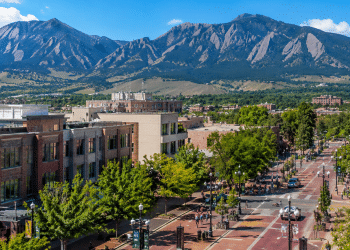

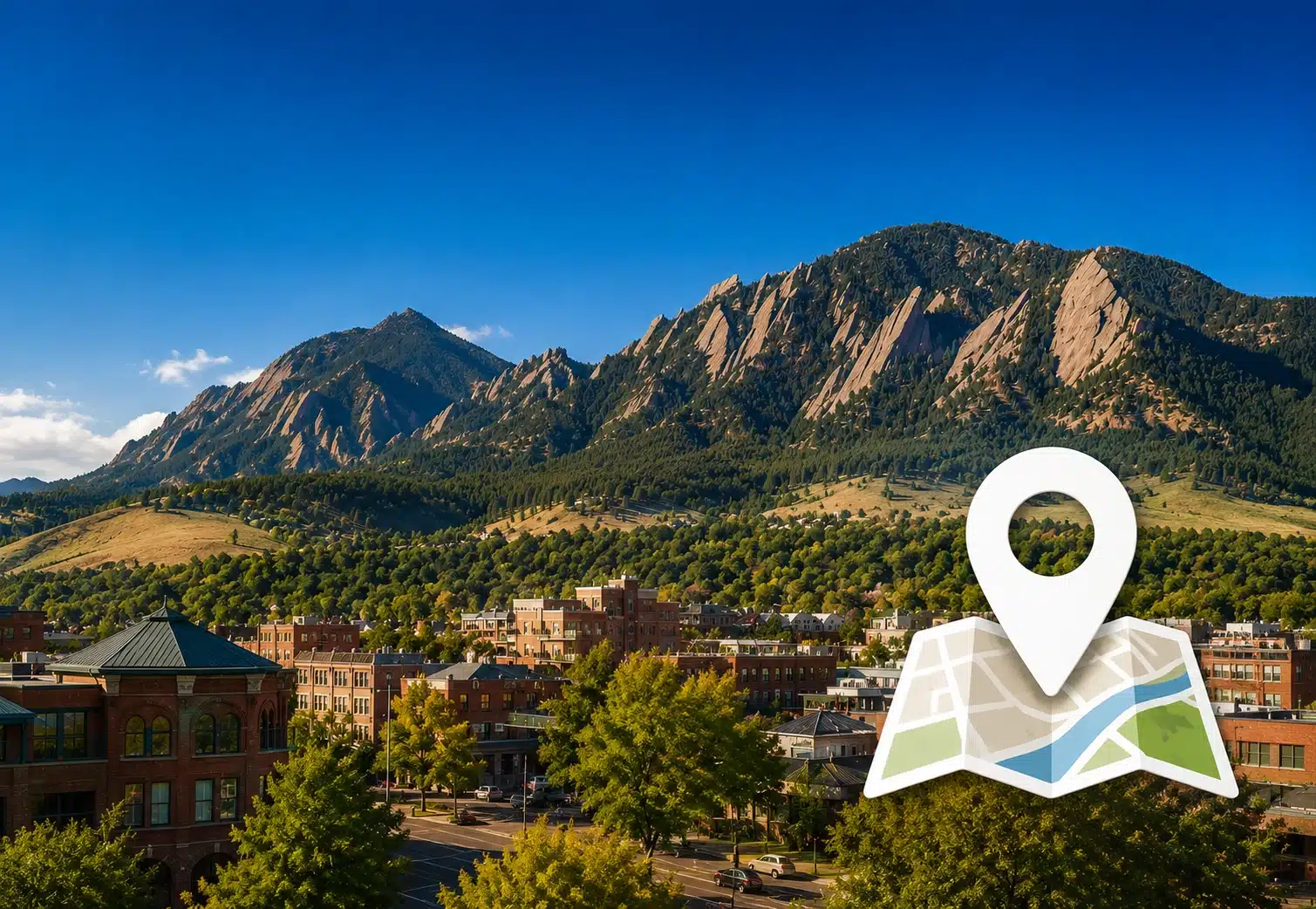
If you’re moving to Boulder or deciding where to live in Boulder, I think a map is the fastest way to understand Boulder. The city is built around a strong downtown core, CU Boulder, a big open-space system, and distinct neighborhood pockets that feel different from one another. Boulder also has more than 46,000 acres of open space and roughly 155 miles of trails, so location really changes your day-to-day life here.
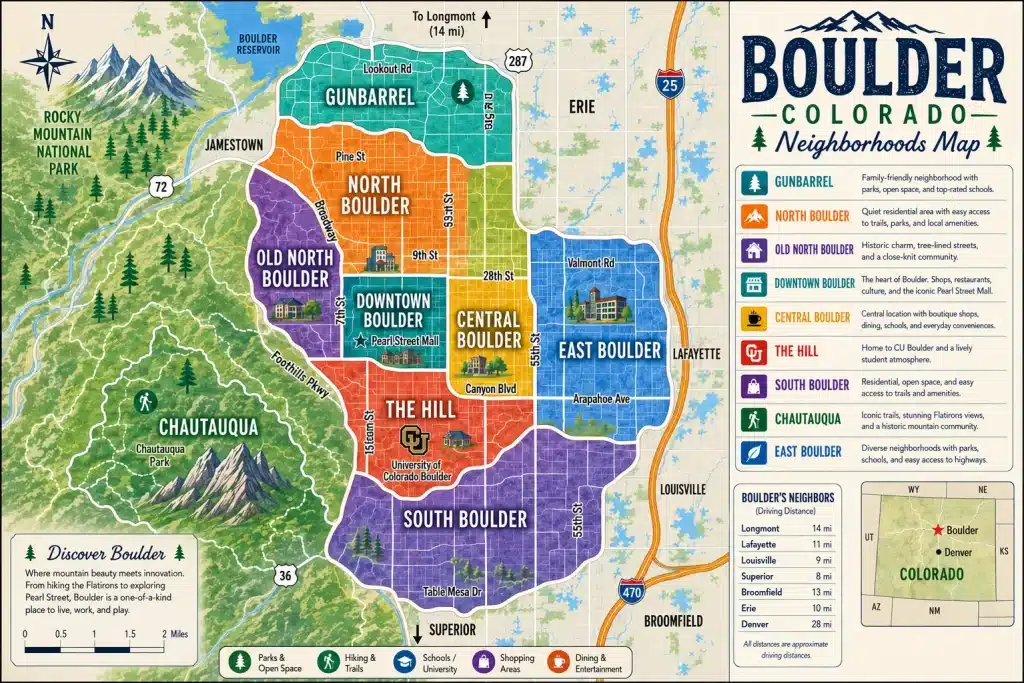
I put this Boulder Colorado neighborhoods map guide together so you can explore the city’s neighborhoods, major roads, parks, and open spaces in one place.
Understanding the Geography of Boulder, CO
Let’s take a look at the Boulder, Colorado neighborhood map:
ALSO READ: The Pros and Cons of Living in Boulder
Overview of Boulder's Neighborhoods
Boulder is located at the base of the Rocky Mountain foothills about 30 miles northwest of Denver. The city is known for its outdoor lifestyle, extensive open space system, highly educated population, and the presence of the University of Colorado Boulder. While Boulder covers a relatively small geographic area, its neighborhoods vary significantly in character, from the walkable streets of Downtown Boulder and the student-oriented atmosphere of The Hill to the quieter residential communities of North Boulder, South Boulder, and Gunbarrel.
Downtown Boulder
Downtown Boulder serves as the city’s commercial and cultural center and is anchored by Pearl Street Mall. The neighborhood contains many of Boulder’s restaurants, shops, offices, hotels, and community gathering spaces. Throughout the year, residents and visitors attend events, festivals, and activities that help make Downtown one of the most active parts of the city. A highly walkable layout and central location continue to make this area one of Boulder’s most popular destinations.
North Boulder
North Boulder is a primarily residential area located north of Downtown Boulder. The neighborhood includes a mix of established homes, newer developments, community parks, and access to open space. Compared to the city center, North Boulder generally offers a quieter atmosphere while still providing convenient access to local businesses and recreational opportunities. The NoBo Arts District also contributes to the area’s distinct community character.
Old North Boulder
Old North Boulder is an established residential neighborhood situated between Downtown Boulder and North Boulder. Mature trees, traditional homes, and well-connected streets contribute to the area’s longstanding appeal. Close proximity to Downtown allows residents to enjoy easy access to restaurants, shopping, and community amenities while living in a more residential setting. Many homes in the area reflect Boulder’s older neighborhood character.
ALSO READ: What’s It Like Living In Boulder, Colorado?
Central Boulder
Central Boulder occupies a central location within the city and provides convenient access to many of Boulder’s major destinations. Residential neighborhoods, schools, parks, shopping areas, and community services are located throughout the area. Access to Downtown Boulder, CU Boulder, and major transportation corridors is generally straightforward. The neighborhood’s location makes it a practical choice for residents who regularly travel throughout the city.
The Hill
The Hill is located immediately west of the University of Colorado Boulder campus and is closely connected to university life. Student housing, restaurants, coffee shops, and local businesses make up much of the neighborhood. A large student population contributes to a more active atmosphere than many other areas of Boulder, particularly during the academic year. Proximity to campus remains one of the neighborhood’s defining characteristics.
South Boulder
South Boulder occupies the southern portion of the city and is known for residential neighborhoods, foothill views, and access to outdoor recreation. Parks, schools, shopping centers, and community amenities are located throughout the area. Trail systems and open space are easily accessible from many parts of the neighborhood. A combination of natural surroundings and established residential communities has made South Boulder one of the city’s most desirable places to live.
Chautauqua
Chautauqua is located along Boulder’s western edge at the base of the Flatirons. The neighborhood is closely associated with Chautauqua Park and several of Boulder’s most popular hiking trails. Mountain views and direct access to open space contribute significantly to the area’s appeal. Despite its foothill setting, Downtown Boulder remains only a short distance away.
East Boulder
East Boulder includes a mix of residential neighborhoods, employment centers, recreational facilities, and commercial areas. Convenient access to Foothills Parkway, Diagonal Highway, and other major transportation routes supports commuting throughout Boulder County. Compared to neighborhoods closer to the foothills, the landscape is generally flatter and more developed. Ongoing residential and commercial growth continues to shape the area.
Gunbarrel
Located northeast of Boulder, along the Diagonal Highway (CO 119), Gunbarrel is a residential community known for its quieter atmosphere, larger neighborhoods, and convenient access to both Boulder and Longmont. The area offers a mix of single-family homes, townhomes, parks, and local businesses, making it popular with families and professionals alike. While Gunbarrel feels more suburban than many Boulder neighborhoods, residents still enjoy easy access to open space, trails, and recreation. The location of this region near Diagonal Highway also makes commuting throughout Boulder County relatively convenient.
ALSO READ: Boulder Housing Market in 2026
Comparing Boulder Colorado Neighborhoods
If I were narrowing down Boulder neighborhoods, I’d start with three questions: Do I want walkability and downtown energy, easy access to CU Boulder, or a quieter residential setting?
Those answers usually make it much easier to identify the areas worth exploring first.
| Priority | Best Neighborhoods |
|---|---|
| Walkability & Convenience | Downtown Boulder, Central Boulder |
| CU Boulder Access | The Hill |
| Families | South Boulder, North Boulder |
| Outdoor Access | Chautauqua, South Boulder |
| Nature + Neighborhood Character | North Boulder, South Boulder |
| Quiet Residential Atmosphere | North Boulder, Old North Boulder |
| Commuting & Regional Access | East Boulder |
| Dining & Entertainment | Downtown Boulder |
| Student-Friendly Living | The Hill |
| Scenic Foothill Living | Chautauqua |
| Best Place to Start Your Search | Downtown Boulder, Central Boulder |
Which Boulder Neighborhoods Are Closest to CU Boulder?
| Neighborhood | Proximity to CU Boulder | Student Presence |
|---|---|---|
| The Hill | Adjacent to campus | Very High |
| Downtown Boulder | Approximately 1 mile | Moderate |
| Central Boulder | Close | Moderate |
| Old North Boulder | Moderate distance | Low to Moderate |
| North Boulder | Moderate distance | Low |
| South Boulder | Moderate distance | Low |
| East Boulder | Farther from campus | Low |
| Chautauqua | Close to campus but quieter | Low |
Areas With The Highest Student Density
The Hill is Boulder’s primary student neighborhood and offers the shortest walk to campus. Expect a large student population, more rental housing, and increased activity during the academic year.
Areas Close to Campus Without a Strong Student Feel
Downtown Boulder, Central Boulder, and Chautauqua provide relatively easy access to CU Boulder while offering a more balanced mix of residents, housing types, and neighborhood character.
Areas Popular With Families and Long-Term Residents
North Boulder, Old North Boulder, South Boulder, and East Boulder generally have lower student concentrations and are often preferred by families, professionals, and long-term residents.
Game Day and Event Traffic Considerations
Neighborhoods closest to CU Boulder, particularly The Hill, Downtown Boulder, and parts of Central Boulder, typically experience the most noticeable traffic and parking demand during football games, graduation ceremonies, and major campus events.
Student Housing Zones
Student-oriented housing is most concentrated around The Hill and the neighborhoods immediately surrounding the university. While student rentals can be found throughout Boulder, areas farther from campus generally have fewer student-focused housing clusters.
Final Thoughts
Boulder is one of those cities where the neighborhood map really matters. The difference between downtown, CU, north Boulder, south Boulder, east Boulder, and Chautauqua is not subtle, and that is exactly why I like starting with a map before I start comparing houses.
If you’re moving to Boulder Colorado, my advice is simple: use the map first, then compare the neighborhood character, the nature access, the commute, and the exact school assignment by address. That is the fastest way to narrow Boulder down to the area that actually fits your lifestyle.
Frequently Asked Questions
What are the best neighborhoods in Boulder, Colorado?
The best neighborhood depends on your priorities. Downtown Boulder is ideal for walkability, South Boulder is popular with families, Chautauqua offers exceptional outdoor access, and The Hill provides the closest access to CU Boulder.
What is the most walkable neighborhood in Boulder?
Downtown Boulder is generally considered the most walkable area thanks to its concentration of restaurants, shopping, entertainment, and services around Pearl Street Mall.
Are there fully vegan restaurants in Boulder?
Many families focus their search on South Boulder and North Boulder because of their residential character, parks, schools, and access to outdoor recreation.
What neighborhood is closest to CU Boulder?
The Hill is located directly adjacent to the University of Colorado Boulder campus and is the neighborhood most closely associated with student life.
Which Boulder neighborhoods have the best access to hiking trails?
Chautauqua and South Boulder provide some of the easiest access to Boulder’s trail network, open space, and foothill recreation areas.
Is North Boulder a good place to live?
North Boulder is one of the city’s most popular residential areas, offering a balance of neighborhood character, outdoor access, parks, and convenient access to Downtown Boulder.
How do I choose the right Boulder neighborhood?
Start by identifying your priorities, such as walkability, proximity to CU Boulder, school preferences, commute times, outdoor access, or neighborhood atmosphere. Comparing neighborhoods side-by-side is often the easiest way to narrow down your options.

CONTACT THE PHILLIPS TEAM TO HELP YOU WITH YOUR NEXT BOULDER AREA HOME
Shad & Claudine Phillips – Certified Mountain Area Specialist 303-218-6926
Have Questions? – Text @ 214-682-2113 – No Really, I Don’t Mind!